BRISBANE SONGLINES
(2022 - 2023)
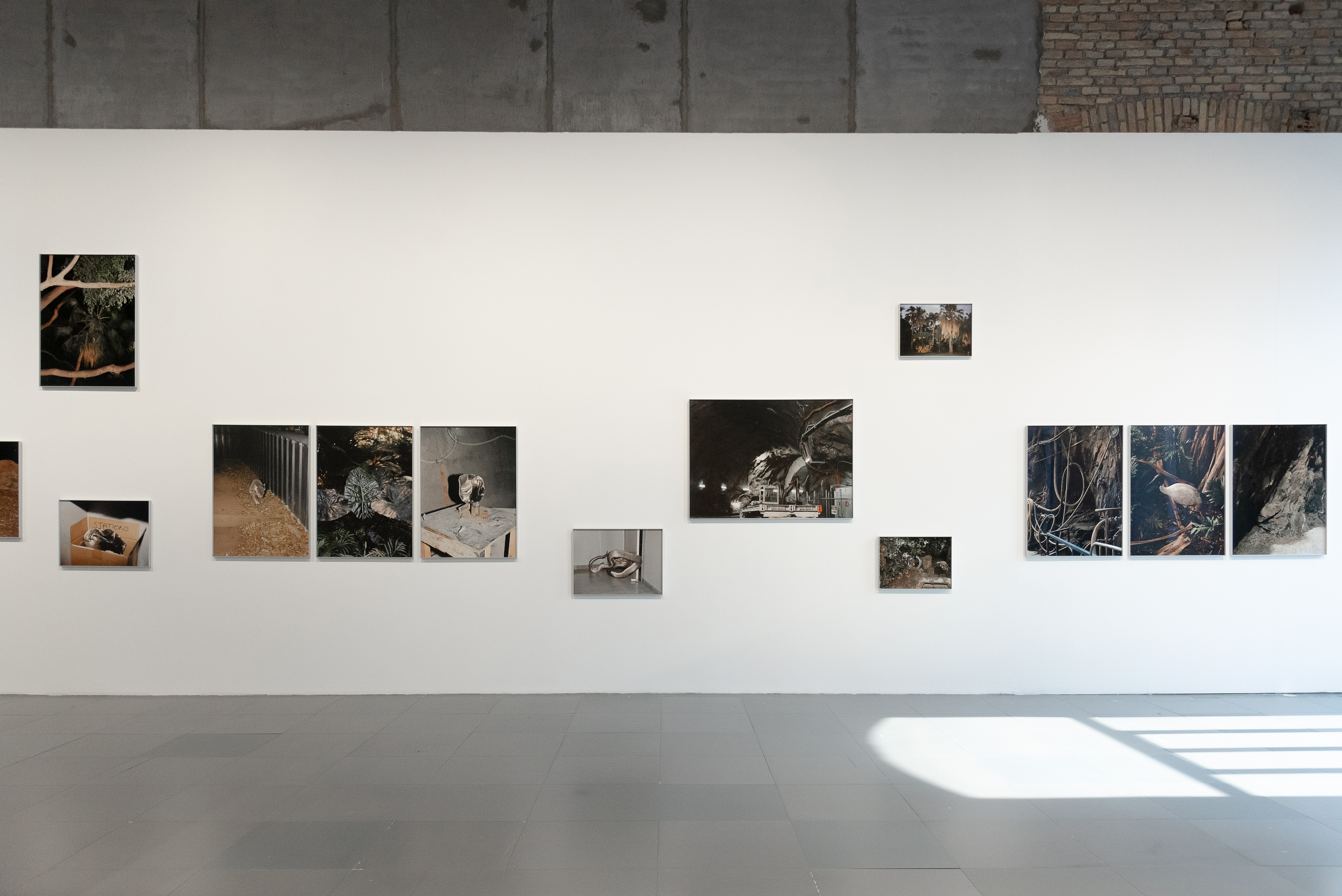
![Nuove Avventure Sotterranee, exhibition view, MAXXI Museum, 2024, Rome. © Eleonora Cerri Pecorella. Courtesy of Ghella and MAXXI Museum.]()
![Nuove Avventure Sotterranee, exhibition view, MAXXI Museum, 2024, Rome. © Eleonora Cerri Pecorella. Courtesy of Ghella and MAXXI Museum.]()
From Nuove Avventure Sotterranee, Quodlibet Edition, 2024:
[...]
BRISBANE SONGLINES
(2022 - 2023)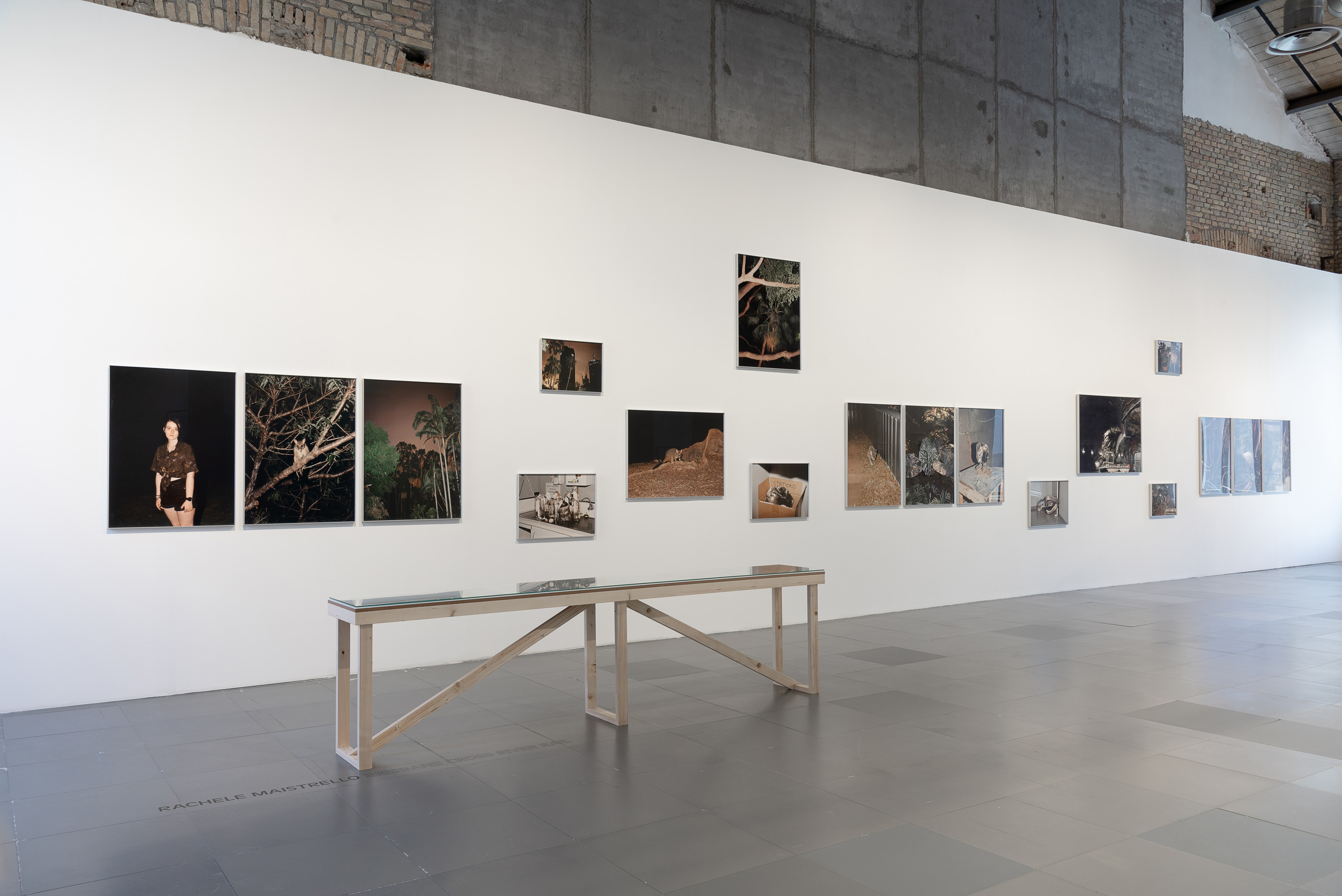
Brisbane Cross River Rail
Dutton Park–Bowen Hills Section
Brisbane SONGLINES
A conversation between Rachele Maistrello and Alessandro Dandini de Sylva
“What is the point of travelling hundreds of kilometres to discover new worlds? The most mysterious place on Earth lies right beneath us.”
AD: In 1768, James Cook set sail aboard the Endeavour with the mission of exploring the Pacific Ocean, observing the transit of Venus across the Sun in 1769, and searching for evidence of the existence of Terra Australis. The expedition crossed the Atlantic, rounded Cape Horn, reached Tahiti in time for the transit of Venus, and continued on to New Zealand before arriving at the eastern coast of Australia in 1770. Cook was the first European to explore the coastline of the new continent and map it by producing nautical charts and coastal views. Alongside this invaluable cartographic work, a group of naturalists and artists led by Joseph Banks carried out an equally significant collection and classification of numerous species of exotic plants and animals previously unknown to European science.
A double mapping process that I unexpectedly found reflected in your work, and which I came to understand as deeply connected to your way of looking at the world.
RM: This attitude has deep roots. Even in my childhood, the mapping of space followed two sets of coordinates: the classical spatial-temporal ones, and others—labyrinthine and secret—that belonged to my father’s world as a passionate ornithologist. For him, the seasons were marked by the delay or early arrival of migratory species; geography was not defined by the four cardinal points, but by the invisible trajectories of birdsong moving through the vegetation. It was enough to move a few metres away from home to discover infinite possible worlds: a piece of bamboo could become a three-note whistle, a branch from an ordinary boxwood hedge could become a perfectly precise bow.
Australia was his El Dorado: a reserve of unique bird species, a place of untouched vegetation, it was the fuel for his most vivid dreams and the subject of the books that filled our shelves. Over time, I have been rediscovering his coordinates within my own way of seeing, like an inner riddle, and discovering how true what he always repeated to me was: la vida es sueño.
AD: Your photographic campaign is probably the most mysterious one carried out so far. Entrusting you with the Brisbane construction site opened up possibilities for storytelling and visual explorations that we had not anticipated.
RM: When you contacted me to ask whether I wanted to go to Australia, I experienced it as a synchronistic event, an impulse to investigate a mythological narrative connected to my own origins. In a certain sense, I felt like Estella setting out for the South.
But why, I wondered, did this synchronicity want me in Australia, yet not in the places my father loved—made of light, songs, and colours—but instead metres and metres below the surface, among the mud and darkness of an excavation site for a gigantic infrastructure project?
Perhaps because I too, like Estella, hoped to find the origins of a family secret, which for her is, coincidentally, dowsing—the art of finding water hidden deep underground?
AD: Estella’s South has to do with an inner geography whose coordinates are memory and dreams. It is a territory you have chosen to explore by following anti-narrative paths and tracing maps that, like the “songlines” described by Bruce Chatwin in The Songlines (1987), overlap identity, culture, and landscape. [...]
![]()
![]()
![]()
![]()
![]()
![]()
![]()
![]()
![]()
![]()
![]()
![]()
![]()
![]()
![]()
![]()
![]()
“What is the point of travelling hundreds of kilometres to discover new worlds? The most mysterious place on Earth lies right beneath us.”


